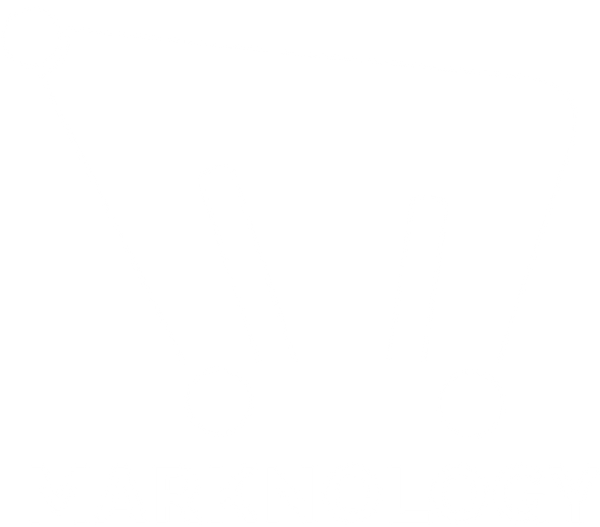
- ACoS formula and calculation. ACoS (Advertising Cost of Sale) equals ad spend divided by ad-attributed revenue multiplied by 100, so spending $500 to generate $2,000 in attributed ad sales results in a 25% ACoS.
- ACoS counts only attributed ad revenue. ACoS does not include organic sales, Subscribe and Save revenue, or purchases outside the attribution window, which is why TACoS (Total Advertising Cost of Sale) is important for measuring overall business health.
- Break-even ACoS matches profit margin. Your break-even ACoS equals your profit margin percentage, so if you have a 30% margin after COGS, FBA fees, and referral fees, a 30% ACoS means you are breaking even on ad spend.
- Good ACoS depends on context. There is no universal good ACoS number without knowing your product category, profit margin, and stage of growth, making benchmarks meaningless without this information.
Quick answer: ACoS (Advertising Cost of Sale) is Amazon's metric for how efficiently ad spend converts to revenue: ACoS = (Ad Spend ÷ Ad Revenue) × 100. Spend $500 to make $2,000 in attributed ad sales and your ACoS is 25%. It counts attributed ad revenue only, not organic or Subscribe-and-Save sales.
If you've spent more than five minutes inside Amazon Seller Central, you've seen the ACoS number staring back at you. Maybe it's 45% and you're panicking. Maybe it's 12% and you're not sure if that's good or leaving money on the table. Either way, most sellers are reacting to ACoS without a framework for what it should actually be.
We've managed PPC for hundreds of Amazon brands across nearly every category. Here's everything you need to know about ACoS in 2026, what good looks like, and how to move the number in the right direction.
What is ACoS on Amazon and why does it matter?
ACoS stands for Advertising Cost of Sale. It's Amazon's native metric for measuring how efficiently your ad spend is converting to revenue. Simple concept, but most sellers misinterpret it constantly.
ACoS Formula Explained
The formula is straightforward:
ACoS = (Ad Spend / Ad Revenue) x 100
If you spent $500 on ads and generated $2,000 in attributed ad sales, your ACoS is 25%. That's it. No complicated math.
But here's where people trip up. ACoS is calculated against attributed ad revenue only. It does not include your organic sales, your Subscribe and Save revenue, or any purchases that happened outside the attribution window. That limitation is exactly why you need to understand TACoS too, which we'll cover below.
ACoS vs TACoS vs ROAS - Which Metric Matters Most
Three metrics get thrown around constantly in Amazon PPC conversations. Here's what each one actually tells you:
ACoS (Advertising Cost of Sale) measures ad spend against ad-attributed revenue. It's useful for campaign-level optimization and comparing ad efficiency across keywords. High specificity, but limited scope.
TACoS (Total Advertising Cost of Sale) measures ad spend against your total store revenue, including organic. This is the real health metric. A rising ACoS alongside falling TACoS actually means your organic sales are growing, which is a great sign.
ROAS (Return on Ad Spend) is the inverse of ACoS expressed as a multiplier instead of a percentage. A 25% ACoS equals a 4x ROAS. Some agencies prefer reporting in ROAS because a higher number reads better to clients. The math is the same either way.
For day-to-day campaign management, focus on ACoS. For brand health and growth trajectory, watch TACoS. Don't let your agency report only ROAS without showing you the underlying ACoS and TACoS picture. It's an easy way to obscure what's actually happening.
Why ACoS Alone Can Be Misleading
A 15% ACoS sounds great until you realize your product has a 12% margin and you're actively losing money on every ad-driven sale. A 55% ACoS sounds terrible until you realize you're in launch mode and every sale is building organic rank that will compound for years.
ACoS without context is noise. You need to know your break-even ACoS, your target ACoS based on business goals, and where you are in the product lifecycle before you can judge any number as good or bad.
Break-Even ACoS Formula:
Break-Even ACoS = Profit Margin %
If your margin after COGS, FBA fees, and referral fees is 30%, then a 30% ACoS means you're breaking even on ad spend. Below that, you're profitable on ads. Above that, you're paying for rank, reviews, or brand awareness.
What is a good ACoS by product category?
There is no universal "good ACoS." Anyone who gives you a single number without asking about your category, margin, and stage of growth is guessing. That said, here are realistic benchmarks we see across categories in 2026.
Average ACoS by Product Category
| Category | Typical ACoS Range | Notes |
|---|---|---|
| Supplements | 25% - 40% | High repeat purchase value justifies higher acquisition ACoS |
| Beauty | 20% - 35% | Brand loyalty and LTV make aggressive spend worthwhile early |
| Home & Kitchen | 15% - 30% | Lower margins in this space require tighter control |
| Electronics | 10% - 20% | Thin margins demand efficiency. Expect highly competitive CPCs. |
| Grocery | 20% - 35% | Subscribe & Save repeat volume can support higher launch spend |
| Pet Supplies | 20% - 35% | Strong loyalty category. Good LTV justifies acquisition investment. |
| Baby | 20% - 30% | Safety concerns and brand trust slow conversion, which pressures ACoS |
| Sports & Outdoors | 15% - 25% | Seasonal spikes and mid-range margins keep most brands in this range |
Use these as starting points, not targets. Your actual break-even ACoS is the only benchmark that truly matters for your business.
Launch ACoS vs Mature ACoS - Different Goals for Different Stages
One of the most common mistakes we see is applying mature product expectations to a launch. During launch, your job is not to be profitable on ad spend. Your job is to generate velocity, collect reviews, and build organic rank.
Want help with this? Book a free strategy call with our team.
Launch Phase (Months 1-3): Expect and accept ACoS of 50-80% or higher. You're buying data and rank, not just sales. The goal is to get enough conversions on your target keywords that Amazon's algorithm starts ranking you organically. Every organic ranking you gain will compound your returns for months.
Growth Phase (Months 4-9): As organic rank builds and conversion rate improves with more reviews, ACoS should naturally pull down. Target getting within 10-15% of your break-even ACoS during this phase.
Mature Phase (Month 10+): A well-structured mature product should run 10-20% below break-even ACoS. At this point, ads are amplifying organic performance, not carrying the whole load. TACoS should be notably lower than ACoS because organic is doing real work.
When High ACoS Is Actually Good
There are three scenarios where a high ACoS is the right strategy, not a problem to fix.
Brand Defense Campaigns: Bidding on your own brand terms keeps competitors off your listings. Even at 40-50% ACoS, defending your brand name is almost always worth it. You're not losing those customers to low ACoS, you're keeping them from going to a competitor.
Market Share Grabs: If a top competitor is pulling back spend, aggressive short-term spend at high ACoS can win category rank that sticks long after the campaign ends. We've seen brands buy their way into the top 3 organic positions this way and never look back.
High-LTV Products: A supplement brand with 80% of customers on Subscribe and Save can afford a 60% ACoS on the first sale. The math works over a 12-month customer relationship, not on the first transaction. Model your LTV before deciding an ACoS is "too high."
How can you lower your ACoS without killing sales?
This is where most guides get vague. "Lower your bids." Thanks, very helpful. Here's what actually works.
Campaign Structure That Controls Spend
Exact match keyword harvesting is the foundation of controlled spend. The concept is simple: run broad and phrase match campaigns to discover converting search terms, then move the winners into isolated exact match campaigns with tighter budgets and bids.
The structure that works for most brands:
- Auto campaign: Discovery only. Low bids, modest daily budget. Mine search term reports weekly.
- Broad/Phrase campaigns: Secondary discovery layer. Slightly higher bids than auto.
- Exact match campaigns: Your proven performers. This is where you put real budget and optimize aggressively.
- Competitor targeting campaigns: Separate budget bucket. Watch ROI independently.
- Defensive brand campaigns: Brand terms only. Never let these run out of budget.
When campaigns are siloed this way, you can see exactly where spend is going and which keyword types are dragging ACoS up. The sellers with 50% ACoS almost always have everything dumped into one or two auto campaigns with no harvesting. They're paying broad match rates for clicks that should be on tight exact match.
Our Amazon PPC management team rebuilds campaign structure as the first step with every new client. The ACoS improvements from structure alone, before any bid changes, are consistently 10-20 percentage points.
Negative Keyword Strategy
If campaign structure is the foundation, negative keywords are the walls. Without them, you're paying for irrelevant traffic forever.
Pull your search term reports every week. Look for terms that have more than 5 clicks with zero conversions. Add them as exact match negatives to the campaign they came from. Do this consistently for 90 days and your click quality will transform.
Categories of terms to aggressively negative out:
- Competitor brand names (unless you're running dedicated competitor campaigns with separate budgets)
- Low-intent research terms ("how to," "what is," "reviews of")
- Wrong size, color, or variant modifiers that don't match your listing
- Irrelevant category adjacencies (just because you sell protein powder doesn't mean "gym bag" clicks convert)
Bid Optimization and Dayparting
Bids should not be set and forgotten. Use Amazon's placement reports to understand if your top-of-search placements are converting at a different rate than product page placements. If top-of-search converts at 12% and product pages convert at 3%, your base bids are probably wrong for one of those placements.
Dayparting, the practice of adjusting bids based on time of day and day of week, is underused by most sellers. Run your hourly conversion data for 60 days and you'll almost always find patterns. Many consumer categories see weaker conversion on Monday and Tuesday mornings and stronger conversion on weekend evenings. Pulling bids down 30-40% during low-conversion windows can reduce wasted spend meaningfully without touching total sales volume.
You can use our Amazon PPC calculators to model the impact of bid changes on ACoS before making them live.
The Listing Quality Connection
Here's what most PPC guides skip entirely: your listing conversion rate is the biggest lever on ACoS, and PPC managers alone can't fix it.
ACoS is a function of CPC and conversion rate. You can optimize bids forever, but if your listing converts at 8% when competitors convert at 16%, you're always going to be running an uphill battle on ACoS. A higher conversion rate cuts ACoS directly, because you're getting more revenue from the same number of clicks.
Prioritize before touching bids:
- Main image quality. It's the biggest driver of click-through rate from search results.
- Title keyword optimization. The first 80 characters matter most.
- Bullet points that answer objections, not just describe features.
- A+ Content that builds trust and cross-sells.
- Enough reviews to establish social proof (at least 15-20 before heavy ad spend).
Get these right and your PPC performance will improve without a single bid change.
What is TACoS and why do most sellers ignore it?
We've touched on TACoS throughout this guide because we see sellers obsess over ACoS while completely ignoring the metric that actually tells them if their business is healthy.
Why TACoS Is the True Health Indicator
ACoS only measures how efficiently you convert ad clicks to ad-attributed sales. TACoS measures how your ad investment is building the entire business, including organic revenue growth.
A brand doing $100,000/month in total sales spending $20,000 on ads has a 20% TACoS. If that same brand ran no ads, maybe total sales would drop to $40,000. The ads aren't just generating $X in attributed sales, they're protecting and growing the organic baseline too.
TACoS trending downward over time means your organic sales are growing faster than your ad spend. That's the best signal your strategy is working.
How to Calculate and Track TACoS Over Time
TACoS = (Total Ad Spend / Total Revenue) x 100
Pull your total ad spend from Seller Central's advertising reports and your total revenue from the business reports. Divide and multiply by 100. Track this number monthly, not weekly. Weekly TACoS is noisy. Monthly trends tell the real story.
Benchmarks for mature brands in most categories:
- Under 10% TACoS: Excellent. Organic is doing most of the heavy lifting.
- 10-20% TACoS: Healthy range for most established brands.
- 20-30% TACoS: Acceptable for growth-stage brands actively building rank.
- Over 30% TACoS: Worth investigating. Either you're in early launch mode, or organic rank is weak and ads are carrying too much of the business.
The TACoS Flywheel
The most powerful thing that happens when PPC is run correctly is the compounding effect between paid and organic. Here's how the flywheel works:
Ad spend drives clicks and sales velocity on target keywords. Sales velocity signals to Amazon's algorithm that your product is relevant and converts. Amazon rewards you with higher organic rank. Higher organic rank generates free clicks and sales, which increase your total revenue without increasing your ad spend. Higher total revenue with the same ad spend drops TACoS. Lower TACoS frees up budget to invest in new keywords or product launches, which starts the cycle again.
This is why early high ACoS is an investment, not a failure. You're buying the initial velocity that starts the flywheel. Brands that refuse to tolerate any high-ACoS period during launch often never get the flywheel moving at all.
Our complete breakdown of Amazon PPC strategy is available in the Amazon PPC Advertising Hub, including how we build TACoS tracking into every brand we manage.
When should you hire an agency for PPC management?
Not every seller needs an agency. But there are clear signals that your PPC situation has outgrown what you can manage alone or with an in-house generalist. Amazon PPC management services can help you achieve these goals.
Signs Your ACoS Is Out of Control
- ACoS has been above break-even for more than 90 days with no clear plan to pull it down.
- You're not pulling and acting on search term reports at least weekly.
- Your campaign structure is all auto campaigns or one broad catch-all manual campaign.
- Spend is increasing month over month without a corresponding increase in total revenue.
- TACoS has been trending up for two or more consecutive quarters.
- You don't know your break-even ACoS off the top of your head.
- You're spending more than 3-4 hours per week on PPC and still feel behind.
If more than two of those are true, you're likely leaving significant money on the table or actively losing margin you don't have to lose.
What a Good Agency Does Differently
There's a lot of noise in the Amazon agency space. Here's what separates real PPC management from bid-shuffling that looks like work: full-service Amazon agency can help you achieve these goals.
They start with data, not assumptions. A proper audit of your account before touching anything. Understanding your margins, your category, your stage of growth, and your business goals before changing a single bid.
They build structure before optimizing. Campaign architecture that separates discovery, harvesting, and scaling. Not just adjusting bids inside a broken structure.
They report on business outcomes, not just ad metrics. TACoS, organic rank changes, total revenue contribution. Not just ACoS in isolation.
They coordinate PPC with listing optimization. They understand that the best-managed campaigns in the world can't fix a listing that converts at 5%.
They're proactive about seasonal strategy. Not reactive. You shouldn't hear about Q4 opportunities from your agency in October.
If you're not sure whether your current management is actually moving the needle, a second opinion costs nothing.
Ready to see what your ACoS should actually be?
We'll audit your PPC account, show you exactly where your spend is leaking, and give you a specific plan to get ACoS where it needs to be. No commitments, no sales pressure. Just clarity on your numbers.
Book Your Free PPC Audit
Related: Amazon Account Audit: What to Check Before Hiring an Agency
Related: Amazon Consulting: When You Need It and How to Choose
What is the typical ACoS range by product category?
| Product Category | Typical ACoS Range | Key Notes |
|---|---|---|
| Supplements | 25% - 40% | High repeat purchase value justifies higher acquisition ACoS |
| Beauty | 20% - 35% | Brand loyalty and LTV make aggressive spend worthwhile early |
| Home & Kitchen | 15% - 30% | Lower margins in this space require tighter control |


Frequently Asked Questions About Amazon ACoS
What is ACoS on Amazon?
ACoS (Advertising Cost of Sale) is Amazon's metric for measuring the efficiency of your sponsored ad campaigns. It's calculated by dividing your total ad spend by your total ad-attributed revenue and multiplying by 100. A 25% ACoS means you spent $25 in ads for every $100 in sales those ads generated.
What is a good ACoS percentage on Amazon?
A good ACoS depends entirely on your product margin, category, and growth stage. The benchmark to care about most is your break-even ACoS, which equals your profit margin percentage. If your margin is 30%, an ACoS under 30% is profitable on ads. Category averages range from 10-20% for electronics to 25-40% for supplements. During a product launch, ACoS of 50-80% can be appropriate.
How do I calculate ACoS on Amazon?
Use the formula: ACoS = (Total Ad Spend / Total Ad Revenue) x 100. You can find both numbers in your Seller Central advertising reports. For example, if you spent $1,000 on ads and those ads generated $4,000 in attributed sales, your ACoS is 25%. To find your break-even ACoS, calculate your net profit margin percentage (after COGS, FBA fees, and referral fees), and that number is your break-even point.
What is the difference between ACoS and TACoS?
ACoS measures ad spend against ad-attributed revenue only. TACoS (Total Advertising Cost of Sale) measures ad spend against your total store revenue, including organic sales. TACoS is the more meaningful business health metric because it shows whether your ad investment is actually growing the overall business or just churning ad-to-sale conversions. A falling TACoS with stable or rising ACoS typically means your organic rank is growing, which is a strong positive signal.
How can I lower my ACoS on Amazon?
The most impactful ways to lower ACoS are: restructuring campaigns into discovery, harvesting, and scaling layers; building an aggressive negative keyword strategy based on weekly search term report analysis; improving listing conversion rate (main image, title, bullets, A+ Content); optimizing bids by placement using conversion rate data; and implementing dayparting to reduce spend during low-conversion time windows. Listing quality improvements often deliver bigger ACoS reductions than any bid optimization.
Is a lower ACoS always better?
No. An extremely low ACoS can mean you're underspending and leaving sales and organic rank on the table. If you're in a launch phase, a low ACoS might mean your bids are too conservative to win enough impressions to build velocity. During brand defense campaigns or aggressive market share periods, a higher ACoS is often strategically correct. Always evaluate ACoS in the context of your business goals, stage of growth, and TACoS trend alongside it.
Drew Morgans
Founder & CEO, Marknology • 15+ Years on Amazon • 300+ Podcast Episodes
Drew founded Marknology in 2015 from a spare bedroom in Kansas City. Today his team manages $2B+ in Amazon revenue across 46+ active brands. He hosts the Startup Hustle podcast (223+ episodes) and speaks at Amazon Accelerate, Prosper Show, and Seller Sessions.
Read Drew's Story →Ready to Grow Your Amazon Business?
Get a free, no-obligation audit from the team behind $2B+ in managed revenue.
Book Your Free Audit30 minutes • No contracts • No obligation
Ready to Elevate Your Brand on Amazon?
Join 300+ brands that have generated over $2B in revenue with Marknology's proven strategies.
Get Your Free Strategy SessionNeed expert help growing your Amazon business? Marknology is a full-service Amazon agency with in-house 3PL fulfillment. We've helped 300+ brands generate over $2B in marketplace revenue. Learn more about our services.